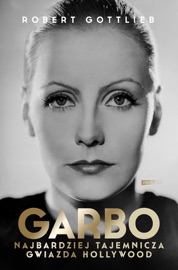
A New York Times Book Review Editors' Choice | One of Esquire's 125 best books about Hollywood Award-winning master critic Robert Gottlieb takes a singular and multifaceted look at the life of silver screen legend Greta Garbo, and the culture that worshiped her.
âWherever you look in the period between 1925 and 1941,â Robert Gottlieb writes in Garbo, âGreta Garbo is in peopleâs minds, hearts, and dreams.â Strikingly glamorous and famously inscrutable, she managed, in sixteen short years, to infiltrate the worldâs subconscious; the end of her film career, when she was thirty-six, only made her more irresistible. Garbo appeared in just twenty-four Hollywood movies, yet her impact on the worldâand that indescribable, transcendent presence she possessedâwas rivaled only by Marilyn Monroeâs. She was looked on as a unique phenomenon, a sphinx, a myth, the most beautiful woman in the world, but in reality she was a Swedish peasant girl, uneducated, naĂŻve, and always on her guard. When she arrived in Hollywood, aged nineteen, she spoke barely a word of English and was completely unprepared for the ferocious publicity that quickly adhered to her as, almost overnight, she became the worldâs most famous actress.
In Garbo, the acclaimed critic and editor Robert Gottlieb offers a vivid and thorough retelling of her life, beginning in the slums of Stockholm and proceeding through her years of struggling to elude the attention of the worldâher desperate, futile striving to be âleft alone.â He takes us through the films themselves, from M-G-Mâs early presentation of her as a âvampââher overwhelming beauty drawing men to their doom, a formula she loathedâto the artistic heights of Camille and Ninotchka (âGarbo Laughs!â), by way of Anna Christie (âGarbo Talks!â), Mata Hari, and Grand Hotel. He examines her passive withdrawal from the movies, and the endless attempts to draw her back. And he sketches the life she led as a very wealthy woman in New Yorkââa hermit about townââand the life she led in Europe among the Rothschilds and men like Onassis and Churchill. Her relationships with her famous co-star John Gilbert, with Cecil Beaton, with Leopold Stokowski, with Erich Maria Remarque, with George Schleeâwere they consummated? Was she bisexual? Was she sexual at all? The whole world wanted to knowâand still wants to know.
In addition to offering his rich account of her life, Gottlieb, in what he calls âA Garbo Reader,â brings together a remarkable assembly of glimpses of Garbo from other peopleâs memoirs and interviews, ranging from Ingmar Bergman and Tallulah Bankhead to Roland Barthes; from literature (she turns up everywhereâin Hemingwayâs For Whom the Bell Tolls, in Evelyn Waugh, Graham Greene, and the letters of Marianne Moore and Alice B. Toklas); from countless songs and cartoons and articles of merchandise. Most extraordinary of all are the picturesâ250 or so ravishing movie stills, formal portraits, and revealing snapshotsâall reproduced here in superb duotone. She had no personal vanity, no interest in clothes and make-up, yet the story of Garbo is essentially the story of a face and the camera. Forty years after her career ended, she was still being tormented by unrelenting paparazzi wherever she went.
A New York Times Book Review Editors' Choice | One of Esquire's 125 best books about Hollywood Award-winning master critic Robert Gottlieb takes a singular and multifaceted look at the life of silver screen legend Greta Garbo, and the culture that worshiped her.
âWherever you look in the period between 1925 and 1941,â Robert Gottlieb writes in Garbo, âGreta Garbo is in peopleâs minds, hearts, and dreams.â Strikingly glamorous and famously inscrutable, she managed, in sixteen short years, to infiltrate the worldâs subconscious; the end of her film career, when she was thirty-six, only made her more irresistible. Garbo appeared in just twenty-four Hollywood movies, yet her impact on the worldâand that indescribable, transcendent presence she possessedâwas rivaled only by Marilyn Monroeâs. She was looked on as a unique phenomenon, a sphinx, a myth, the most beautiful woman in the world, but in reality she was a Swedish peasant girl, uneducated, naĂŻve, and always on her guard. When she arrived in Hollywood, aged nineteen, she spoke barely a word of English and was completely unprepared for the ferocious publicity that quickly adhered to her as, almost overnight, she became the worldâs most famous actress.
In Garbo, the acclaimed critic and editor Robert Gottlieb offers a vivid and thorough retelling of her life, beginning in the slums of Stockholm and proceeding through her years of struggling to elude the attention of the worldâher desperate, futile striving to be âleft alone.â He takes us through the films themselves, from M-G-Mâs early presentation of her as a âvampââher overwhelming beauty drawing men to their doom, a formula she loathedâto the artistic heights of Camille and Ninotchka (âGarbo Laughs!â), by way of Anna Christie (âGarbo Talks!â), Mata Hari, and Grand Hotel. He examines her passive withdrawal from the movies, and the endless attempts to draw her back. And he sketches the life she led as a very wealthy woman in New Yorkââa hermit about townââand the life she led in Europe among the Rothschilds and men like Onassis and Churchill. Her relationships with her famous co-star John Gilbert, with Cecil Beaton, with Leopold Stokowski, with Erich Maria Remarque, with George Schleeâwere they consummated? Was she bisexual? Was she sexual at all? The whole world wanted to knowâand still wants to know.
In addition to offering his rich account of her life, Gottlieb, in what he calls âA Garbo Reader,â brings together a remarkable assembly of glimpses of Garbo from other peopleâs memoirs and interviews, ranging from Ingmar Bergman and Tallulah Bankhead to Roland Barthes; from literature (she turns up everywhereâin Hemingwayâs For Whom the Bell Tolls, in Evelyn Waugh, Graham Greene, and the letters of Marianne Moore and Alice B. Toklas); from countless songs and cartoons and articles of merchandise. Most extraordinary of all are the picturesâ250 or so ravishing movie stills, formal portraits, and revealing snapshotsâall reproduced here in superb duotone. She had no personal vanity, no interest in clothes and make-up, yet the story of Garbo is essentially the story of a face and the camera. Forty years after her career ended, she was still being tormented by unrelenting paparazzi wherever she went.