There is nothing like a long-ago look at what was once the future to wire you into the truth of the present.
Written in 1909, The Machine Stops has been called the father of all 20th century dystopian novels. Brave New World, 1984, Fahrenheit 451âThe Machine Stops is the precursor to them all.
In the distant future, humans live underground, in single cells connected via a communications network which, despite being first published in 1909, amazingly predicts social networking, video and conference calls, and the reduction of human interaction to screens and immobility.
Humanity has lost its humanity: the sole use of online communication means nuances of expression are lost, conversations are a mass of vapid, pointless issues, and tempers flare constantly.
The Machine runs everything; everybodyâs lives are lived out in their one room, where they can speak to thousands of others, but never meet face to face.
Written at a time when most people didnât even own a telephone, Forsterâs story predicts with chilly precision todayâs trend for replacing authentic, first-hand experience with a virtual, facsimile version.
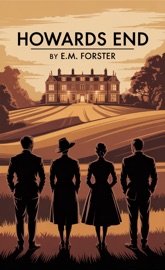
E.M. FORSTER (1879-1970) was an English novelist, short-story writer, essayist, and librettist. He is best known for Maurice, A Passage To India, Howardâs End, and A Room With A View. The Modern Library has listed Howardâs End as one of the 100 best English-language novels of the 20th century.
âThe Machine Stops holds more horror than any number of gothic ghost stories. Everybody should read it, and consider how far we may go ourselves down the road of technological âadvancementâ and forget what it truly means to be alive.â
There is nothing like a long-ago look at what was once the future to wire you into the truth of the present.
Written in 1909, The Machine Stops has been called the father of all 20th century dystopian novels. Brave New World, 1984, Fahrenheit 451âThe Machine Stops is the precursor to them all.
In the distant future, humans live underground, in single cells connected via a communications network which, despite being first published in 1909, amazingly predicts social networking, video and conference calls, and the reduction of human interaction to screens and immobility.
Humanity has lost its humanity: the sole use of online communication means nuances of expression are lost, conversations are a mass of vapid, pointless issues, and tempers flare constantly.
The Machine runs everything; everybodyâs lives are lived out in their one room, where they can speak to thousands of others, but never meet face to face.
Written at a time when most people didnât even own a telephone, Forsterâs story predicts with chilly precision todayâs trend for replacing authentic, first-hand experience with a virtual, facsimile version.
E.M. FORSTER (1879-1970) was an English novelist, short-story writer, essayist, and librettist. He is best known for Maurice, A Passage To India, Howardâs End, and A Room With A View. The Modern Library has listed Howardâs End as one of the 100 best English-language novels of the 20th century.
âThe Machine Stops holds more horror than any number of gothic ghost stories. Everybody should read it, and consider how far we may go ourselves down the road of technological âadvancementâ and forget what it truly means to be alive.â