Never On Mars follows Jeremy Chambet, a physicist who becomes the only man ever to return from a mission to Mars. His ship crash-lands in the ocean with no records, no crewmates, and no proofâonly his testimony about what happened to Christopher Deeley and Peter Quorridge on the Martian surface. At first, the world celebrates him. But celebration quickly twists into suspicion when prize committees try to avoid paying out, relatives file claims, and the press seizes on contradictions in Jeremyâs statements.
Jeremy insists the crew reached Mars, walked beneath an orange sun, examined ruins near the Ismenius Lacus region, and eventually discovered an underwater city populated by unknown beings. According to him, these creatures dragged the ship toward a canal, killed his companions, and nearly destroyed him too. But without evidenceâsince the Uniac 5 exploded on impactâexperts attack every detail of his claims, citing atmospheric calculations, astronomical models, and long-accepted scientific assumptions. Jeremy finds himself isolated, doubted, and accused of murder, fraud, and deceit.
What emerges is not a tale of monsters, but a tense psychological battle: a man struggling against a world that refuses to believe what he saw. Wyndham brings a remarkable sense of plausibility to the story. The expeditionâs cramped living conditions, inter-crew tensions, scientific debates, and emotional strain create a vivid sense of realism that makes Jeremyâs ordeal even more compelling. This isnât just a story about Marsâitâs a story about human beings under pressure, the limits of certainty, and how quickly public admiration can curdle into condemnation.
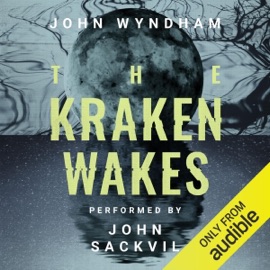
John Wyndham was a pioneering British author whose thoughtful brand of speculative fiction reshaped mid-20th-century science fiction. His most famous novels include The Day of the Triffids, The Midwich Cuckoos, The Chrysalids, and The Kraken Wakes.
Never on Mars: The Survivor No One Believed - John Wyndham
Never On Mars follows Jeremy Chambet, a physicist who becomes the only man ever to return from a mission to Mars. His ship crash-lands in the ocean with no records, no crewmates, and no proofâonly his testimony about what happened to Christopher Deeley and Peter Quorridge on the Martian surface. At first, the world celebrates him. But celebration quickly twists into suspicion when prize committees try to avoid paying out, relatives file claims, and the press seizes on contradictions in Jeremyâs statements.
Jeremy insists the crew reached Mars, walked beneath an orange sun, examined ruins near the Ismenius Lacus region, and eventually discovered an underwater city populated by unknown beings. According to him, these creatures dragged the ship toward a canal, killed his companions, and nearly destroyed him too. But without evidenceâsince the Uniac 5 exploded on impactâexperts attack every detail of his claims, citing atmospheric calculations, astronomical models, and long-accepted scientific assumptions. Jeremy finds himself isolated, doubted, and accused of murder, fraud, and deceit.
What emerges is not a tale of monsters, but a tense psychological battle: a man struggling against a world that refuses to believe what he saw. Wyndham brings a remarkable sense of plausibility to the story. The expeditionâs cramped living conditions, inter-crew tensions, scientific debates, and emotional strain create a vivid sense of realism that makes Jeremyâs ordeal even more compelling. This isnât just a story about Marsâitâs a story about human beings under pressure, the limits of certainty, and how quickly public admiration can curdle into condemnation.
John Wyndham was a pioneering British author whose thoughtful brand of speculative fiction reshaped mid-20th-century science fiction. His most famous novels include The Day of the Triffids, The Midwich Cuckoos, The Chrysalids, and The Kraken Wakes.